Anomalies in the urban grain redact the housing shortage

UPDATE: 10/12/2019

The New London Plan referred to below has been through several rounds of consulation with the hope of adopting the policy before the 2020 London Mayoral Elections.

The Planning Inspectorate has objected to key componants including elements of  Policy H2 relating to Small Site development and densification. Whilst commenting on issues like Green Belt review and the difficulties in developing small sites the Inspectors do note that the consequences of not adopting a London Plan would be worse than adopting one that does not meet the capital’s development needs.

The London Mayor is planning to respond to the Planning Inspectorate objections by Chrismas 2019 and it will then be more clear to what extent the New London Plan will be adopted as policy in 2020.


Original Blog from December 2018 Continues Below:

London’s population has grown exponentially during the last three decades and by 7.5% in the last three years.  It is set to rise to 10.2M by 2036.

This demand equates to a need to provide at least 66,000 new homes per year over the next 10 years.

Approximatly 40% of these will be built on small sites, below the area threshold of 0.25 hectares.  Development of these small sites with a capacity of 1-25 new homes will substantially contribute to the new housing supply across the city.

Below we look at the impact of 2017 The Draft London Plan and The London Mayors new Housing Strategy.  We go on to explain why these commendable and ambitious frameworks will enable and support collaboration between planners, house-builders and architects.

We also look at how Boroughs will need to acknowledge and endorse the advantages of small housing developments within their local development plans and specific planning decisions and how this type of ‘micro’ development can be accommodated in different locations and with varying densities and dwelling types.
10 Year Housing Targets by Borough. Large Sites Black + Small Sites Orange

There have been many previous studies that have looked at how much land might be available from smaller sites throughout London. The SHLAA (Strategic Housing Land Availability Assessment) is the latest analysis and is based on a statistical analysis of the likelihood of small sites becoming available rather than a detailed review based on an analysis of hard facts.  Authors note: (3D Google Earth should surely be an aid to measuring and identifying such sites in 2018).

In 1998 The Friends of the Earth commissioned a study “Tomorrow a Peaceful Path to Urban Reform” which examined how different types of urban patterns could be used to increase urban density.  It also identified that existing residential areas have the capacity for intensification, i.e. the possibility of increasing housing density without increasing the population density.  It cited the following examples.

However there are a unique set of parameters (rules) that need to be addressed to optimize development on small sites so that they benefit the wider community and are not detrimental to residential privacy, designated heritage assets, biodiversity or a safeguarded land use.

At Douglas and King we have a history of delivering housing projects on small sites throughout London.  We became experts at analyzing the suitability of a site, the type of development that might meet with approval with local Planners, and gain consensus from the residents living nearby.

We actively engaged in the process of Pre-Application engagement with local planning authorities to overcome issues that could be detrimental to the Planning outcome, and to establish the exact parameters that would satisfy the local development plan.

We championed what is now cited in the Draft London Plan as future policy, The Presumption in Favour of Small Housing Developments and fought our corner against what was a borough-wide policy, The Presumption Against Approval.

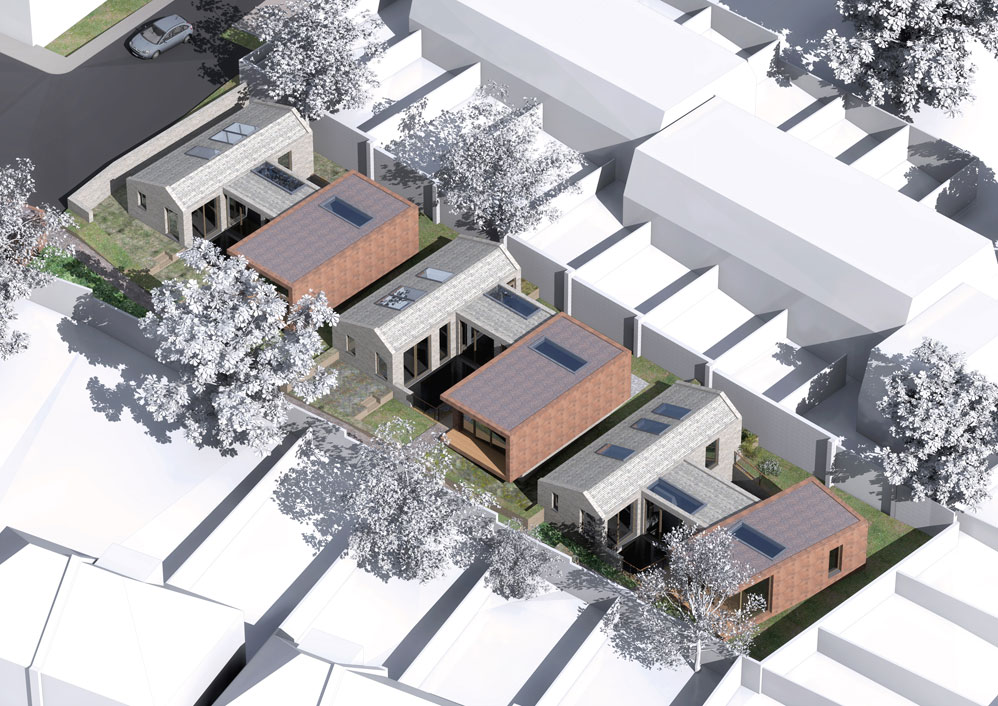
2019. 10 New Homes on a backland site in Barnet.

The Role of Small Sites in Achieving London’s Housing Delivery Targets

Part H2 of the Draft London Plan notes in detail the aspirations of the Mayor’s office for small sites development:

“Small sites should play a much greater role in housing delivery and boroughs should pro-actively support well-designed new homes on small sites through both planning decisions and plan-making in order to:
The Mayor’s Office recommends that London Boroughs should ‘recognise in their Development Plans and planning decisions that local character evolves over time and will need to change in appropriate locations to accommodate additional housing provision and increases in residential density through small housing developments’

The Mayor’s Office recommends that London Boroughs should apply Planning policies In Favour of Sustainable Development of the following small sites (0-25 residential Units):

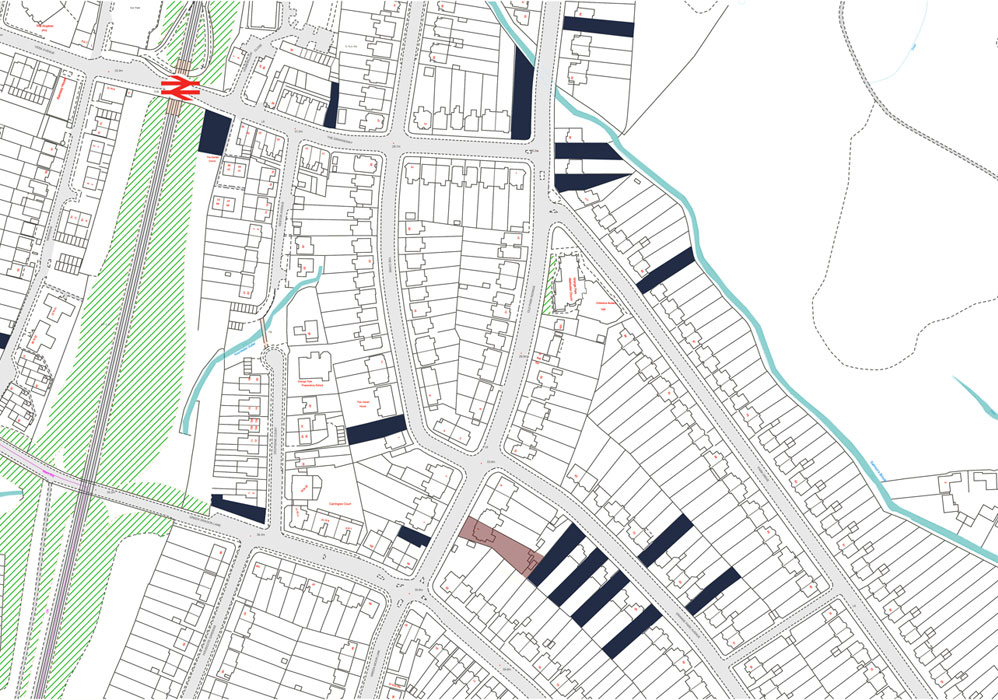
Ideal plots for these kind of development are those that can be described as anomalies within the ‘Urban Grain’.  By this we mean that a garden may be substantially larger than its neighbours, or of the garden sizes prevalent within the neighbourhood.  Street patterns can also determine or demonstrate these anomalies and these can be researched through consultation with up to date site-specific maps.
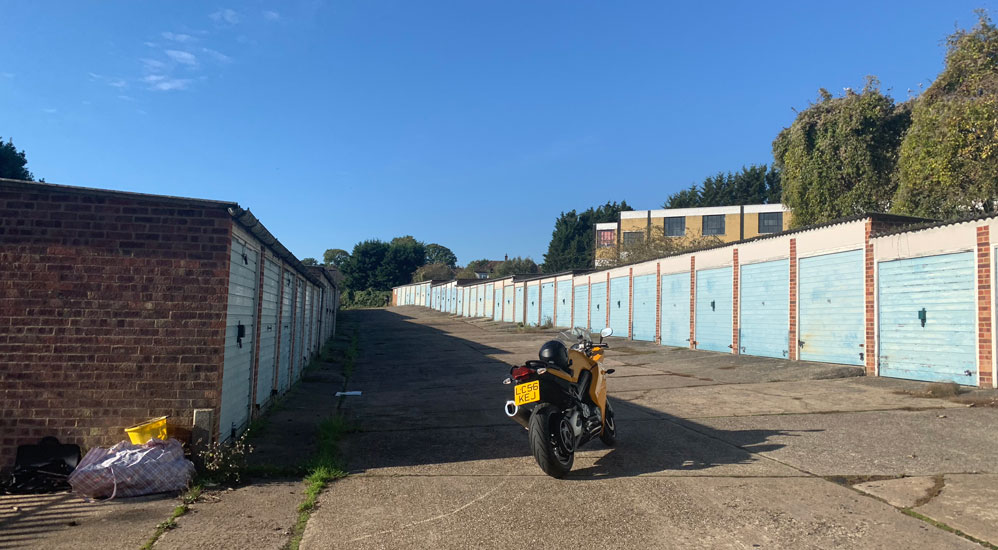
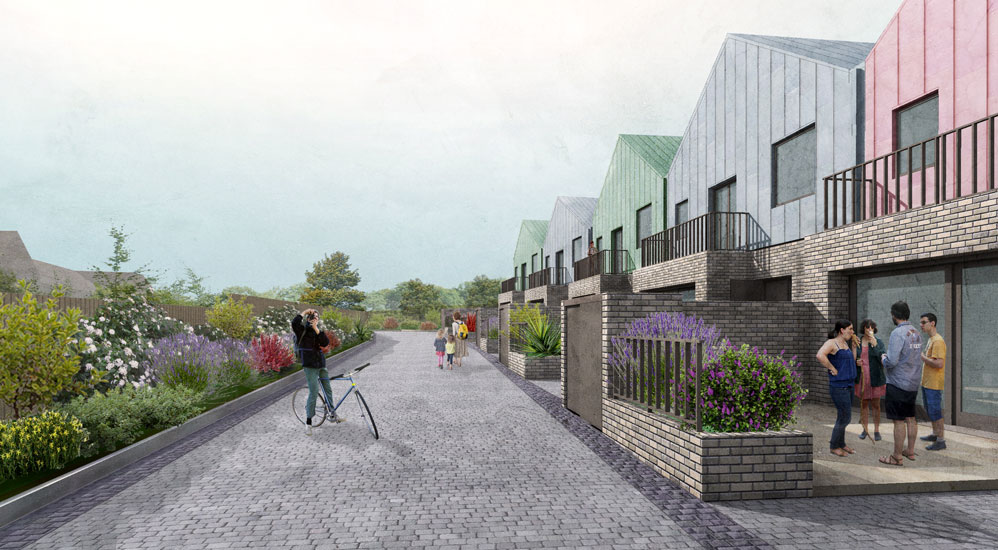
At Douglas and King we carefully consider the following issues when we appraise a small residential development site:

There are a number of studies and surveys we carry out to establish the outcomes of the above including, for example, a Visual Impact Study to appraise the development’s impact on neighbouring buildings

The Role Boroughs and Planners Will Play in Appraising Appropriate Small Site Locations

Planning Policy in London will change in response to the Mayor’s aspiration to increase the built density of London’s housing provision. The extent of the proposed changes in density will require Planners and Londoners to accept the fact that significant parts of their built environment will need to evolve in character and form.

The London Plan sets out a framework for good development under the following headings:

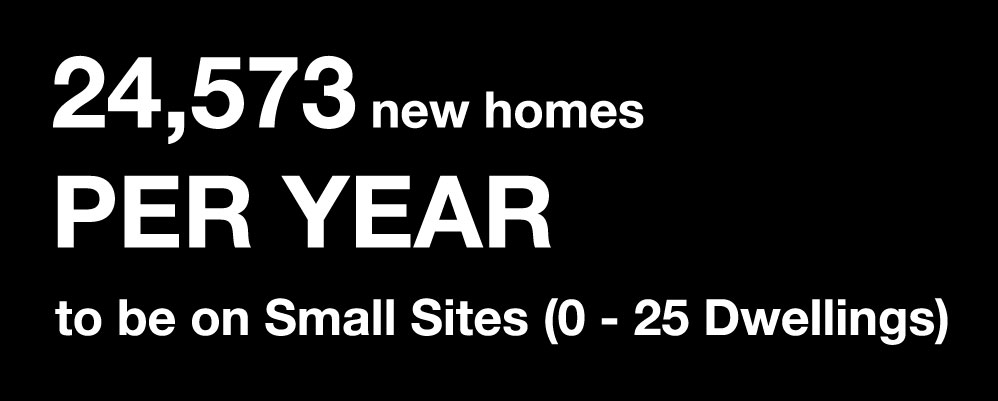
SLHAA Assessments show that small sites, subject to revisions in local planning policy with a ‘Presumption in Favour of Development’ will represent 24,573 new home completions per year over 10 years.

Our Ambition to Create Homes that are Truly Representative of the 21st Century

The London Plan’s ambition to create more and better designed homes for Londoners now and in the future is shared by the architectural profession.  We also have ambition to create homes that are truly representative of the 21st century and the diverse needs of their occupants.

Aesthetic prejudice to contemporary architecture often dismisses housing solutions as inappropriate so it is important that architects demonstrate their approach responds to the particular characteristics of a site in a clear and cogent manner, that it is not style-based but rather an authentic response to site-specific conditions and has been conceived to maximise the quality of the environment it will create.

Planning officers should be encouraged to have an open-minded approach and to have a greater understanding of the architectural intention. Planners should accept that there will be changes to street-scapes, building densities and social infrastructure. Planners should dismiss pastiche design that attempts to replicate one or another from a preceding era.  This is unacceptable and undermines both the historical and future legacy of our city. Planners should be pro-active in explaining the benefits of local small developments to their communities. If it is the Architects responsibility to engage with the local community then it is essential that Planners step up their role in communicating the local plan and the message that if it is done well it will be for the greater good.

Let’s not forget the mistakes that have been made and ensure that they are never repeated….

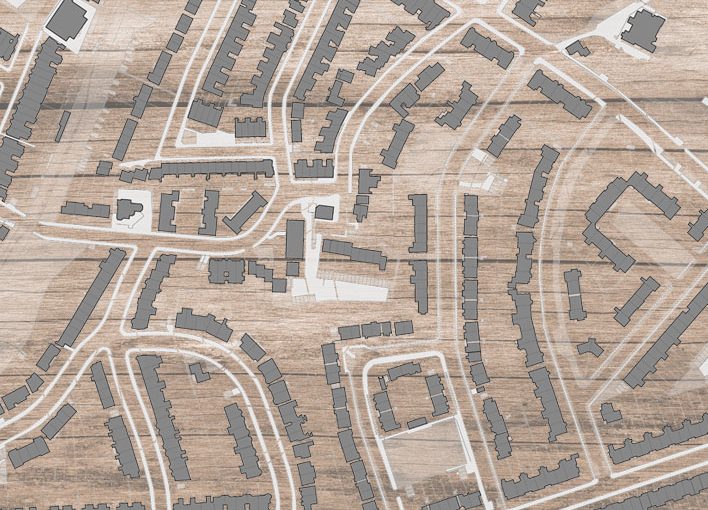
Sustaining the traditional matrix of our cities

For many the above will be a surprising subject title for an architectural blog but it is a vital component in sustaining the traditional matrix of our cities.

Good urban design shapes the backdrop for life in cities and towns and it creates the right conditions for places to be lively, welcoming and safe.

It fosters social and economic diversity and is probably the principle condition for achieving successful urban integration on every level.

Neighbourhood means much more than a localized geographic area – it means human scale buildings, a variety of types and densities, accessibility and proximity to services, public transport, shops, businesses, etc – a livable, workable environment.

Cities need texture and age, physical and cultural continuity.  Density and development need to be balanced with ‘livability’ if we are to preserve them as authentic places for people to live and work in.

Coarse grain urban fabric is like coarse cloth – functional but by no means comfortable.  Such places resist integration and connectivity – instead they promote isolation, are inward looking and are inhospitable to human interaction.

Fine grain urban fabric is like a finely woven material that is comfortable to wear or linger in.  It gives a sense of belonging, of being safe and therefore able to discover and turn corners without knowing where they might lead.

It evolves over time and relies on what was there before as well as what is there now.   It is not imposed, it can be piecemeal but it is evolutionary and has a dynamic that implies continuity and community.

A built environment that is increasingly dominated by fewer, larger ‘hybrid’ buildings is a symbol of developers negating the ‘wants’ of city dwellers.  And tearing down and re-building is counter-productive to sustainability and ecological goals.   Large, high-rise buildings fail to engage with the pedestrian, and they say little of what is going on inside.

It also negates the opportunities for smaller developers whose motives are often not dissimilar, but can and often do improve and enhance the immediate environment.  Small scale developments take into consideration existing streetscapes and building heights, the number of storeys that will complement the surrounding buildings, the construction materials that will respect what already exists, and the detailing considered and respectful.

There will always be a case for the wholesale regeneration of an inner-city area that has become obsolete because it’s original purpose and activity have vanished.  In these circumstances the ‘historic’ buildings that populate the area can be preserved and re-used and the empty spaces in between can be sites for housing, recreation and communal activity.  Newcomers welcomed by oldcomers with an interplay that is genuinely ‘fine grain’ and reflects the dynamic between decline and renewal.

Creating inclusive communities and neighbourhoods

Douglas and King are currently involved in the planning and design of small, medium and large-scale housing developments.  Whilst we have completed many residential projects in the past, including multiple home models, these have mainly been located in densely populated urban environments.

The challenges of creating a new community within a non-urban setting are multiple.  Fundamental to our strategy is the process known as Place-making.

We have looked at exemplars and learned from them – we understand how successful and sustainable communities can be developed through the fabric and identity of ‘place’.  As architects we have a social and professional responsibility to design the best we can for the aspiration and needs of those we are designing for.

Central to our thinking is how can we design authentically for the community that will live, work and play in this new neighbourhood, what will nurture the elusive spirit that binds rather than separates?  The answer is Place-making.

What is Placemaking

Place-making is an inclusive approach to the design of new environments that create a unique identity – a shared sense of community, a place of being and belonging to – in surroundings which improve the quality of life for the residents.

For each of the housing developments we are involved with we look at how people will interact and how we can design for the benefit of all. This means we must create an identity and a sense of place for the overall development and appraise the individual components that will give the development the ‘dynamic’ we seek to achieve.

We attempt to apply the Principles outlined in the RIBA publication ‘The Art of Building a Garden City’. The Authors state that the garden city principles are not a ‘blue print’ for new developments but do outline a successful approach. Each principle can be beneficial to a smaller development if implemented on its own, however to maximise the potentiality for place-making it is important to incorporate as many as possible.

The core principles of sustainable 21st century communities

1. Land value capture for the benefit of the community

2. Strong vision, leadership and community engagement

3. Community ownership of land and long-term stewardship of assets

4. Developments that enhance the natural environment and provide comprehensive green infrastructure networks and net biodiversity gains, and that use zero carbon and energy positive technology to ensure climate resilience

5. Strong local cultural, recreational and shopping facilities in pedestrianised zones

6. Integrated and accessible transport systems, with walking, cycling and public transport

7. Mixed tenure homes and housing types that are genuinely affordable

8. A variety of employment opportunities within easy commuting distance

9. Beautiful and imaginative homes and gardens, combining the best of town and county to create healthy communities including opportunities for the cultivation of vegetables, fruit and foodstuffs

Current partnerships and policies

It is a regrettable fact, but one nonetheless, that the supply of new housing in the UK is currently indebted to private sector developers. This means that the principal business model/motivation of the organisations involved is not for the common good – it is for profit.

Even the most exemplary and conscientious of housing developers have to provide a return for investors and shareholders that can be measured in monetary terms above all else.

In its 2016 publication, ‘Development: The Value of Place-making’ the property consultants Savills explain that spending on infrastructure, local amenities and public spaces creates better places.

It goes on to describe how the Land Value Uplift through place-making can be increased by as much as 25% and contends that the Land Value Uplift enables the delivery of the kind of neighbourhoods that communities want.

The evidence is provided by financial outcomes from two developments, Poundbury, Dorset and Brooklands, Milton Keynes, both of which are exemplary place-making projects and have increased house values by up to 91% over neighbouring, less considered, housing developments.

10 Principles of Placemaking

The Berkeley Group categorise the following key ingredients in their publication ‘Principles of Place-making’:

Planning
The Correct Location
Partnership Working
Listen and Relate

Design
Bespoke design
Mixed use and mixed tenure
Low carbon
High quality public realm

Implementation
Attention to detail
Each phase is a whole
Invest in management

The Golden Rules Applied

Below we give two examples where we have applied place-making principles to create successful small, medium and large scale housing development.

Goffs Oak, Hertfordshire

This is a small development of 10 residential units and is a perfect example of how place-making, as the core value, is delivering a new sustainable community within a developer led project.  The project has from the outset been conceived with the objective of achieving mixed tenure homes and mixed housing types.

The key place-making features we have applied are:

  • Designed to encourage community engagement
  • Substantial areas of shared land and space within the development which are jointly owned
  • Mixed house types, sizes and tenures
  • Vernacular building types, and each designed individually to respond to location and position
  • Gardens and shared areas landscaped to enhance the natural environment
  • Local shops within walking distance
  • Respect and response to the local environment 

Chadwell St Mary, Essex

Chadwell St Mary is a development to the north of the Essex town of Tilbury that is being designed and planned using the principles of place-making.

The impact of placemaking within the socio-economic equation

Within the interaction of social and economic progress housing plays a vital role.  We live in a pluralistic society so the creation of healthy neighbourhoods is of primary importance.  Strengthening the connections between people and the places they live in and share is central to place-making and to accepted socio-economic goals.

A vibrant, attractive, and secure neighbourhood will attract a mixed demographic and will be of benefit to the overall community strategy of the area.  It will also attract employers as it offers them a workforce with a range of ages, skills and abilities.

How does the creation of successful neighbourhoods through place-making increase development profits?

When people go to look at a property as a potential home they prioritise certain ‘values’ – some of these are commonly shared and some are not.

Shared values will almost always include:

  • A safe and secure neighbourhood
  • Access to schools, shops, recreational areas, public transport
  • Employment opportunities
  • Commuting options and services
  • Quality of life 

Estate agents drive the property market and developers are currently driving the housing market.  In each case the primary motive is to increase the commission value and or to optimise the profit value for their shareholders.  The home-buyer or home-owner isn’t quite a Pawn in their game of Chess but they are certainly not as powerful as the Knight or the Queen.

Developers and estate agents will sell the concept of ‘lifestyle’ over and above the aesthetic of the development’s design or its community and environmental attributes.

As architects commissioned to design these new housing developments it is important that we ‘sell’ hard the benefits of successful place-making and that the goal is long-term not short-term.  We hope to share this sense of responsibility for the communities we develop with our developer partners and to embrace a collective ambition to:

  • create inclusive communities that will endure beyond our lifetime
  • yield the investment potential that the developer requires
  • contribute to the quality of life for those who live in the homes we design
  • build homes that are authentic, have longevity and flexibility
  • work with the most sustainable methods of construction, insulation, ventilation, etc 

Other accompanying blogs in this series are:

Designing Homes – The Argument for an Authentic Approach

Evolution of The House Type

Modern Methods of Construction

Garden grabbing policy dropped in revised London Plan

Creating new houses on Gardens and Back Land Sites in London is not always “Garden Grabbing” as it can sometimes be derisively described. To be successful this type of development does require evaluation and assessment, and careful consideration of the relevant issues.


So here’s a useful Overview of the Risks Involved.  There are the obvious ones such as Planning Consent, Party Wall Agreements, Construction Costs and the less obvious ones (but equally relevant) such as the Suitability of Plots, and Issues such as Access, Utilities, Restrictions, Land Ownership, etc.


For a specific analysis of a plot please contact the design studio and we will be happy to discuss a potential development with you and can also provide you with a copy of our publication ‘individual dwellings’ and a fact sheet on this topic.


Please Email info@douglasandking.com with the title ‘Individual Dwellings’ for a copy of the publications.


Many outer London borough homes have abnormally large back gardens and extended ‘backland’ areas adjacent to them.   At first sight they would seem to be ideal for the construction of a new dwelling. However there are a number of potential hurdles to overcome to achieve a successful outcome and in this blog we run through the main issues to be aware of.


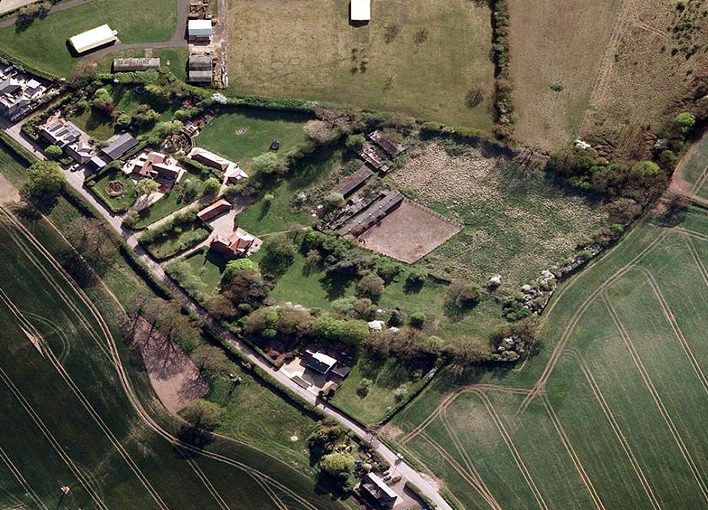
Ideal plots for this kind of development are those that can be described as anomalies within the ‘Urban Grain’.  By this we mean that a garden may be substantially larger than its neighbours, or of the garden sizes prevalent within the neighbourhood.  Street patterns can also determine or demonstrate these anomalies so accurate and up to date site-specific maps should be consulted.

2-OldPr-Arial-998x723

The topography and orientation of a site are also important. It is common to reduce the impact of a new building by working with the existing land levels.  These can become an integral design component by for example, creating semi-subterranean buildings and/or designing low Impact environmentally friendly dwellings.

3-STJm-998x706

A new dwelling will need to be accessed from the public highway and permission may be required from the local council’s Highways department to create a new crossover. It is vital to ascertain whether access routes cross land or title owned by others as permission will be necessary in order to create a new access i.e. a driveway and whether the access allows for the routes of utilities below ground. The latter is commonplace in land bordering railway lines and/or land owned by utility companies.


Prospective developments must establish land ownership and any easements or rights of way within the land registry deeds. The title deeds for a property will set out any conditions that might restrict the development of a piece of land. Restrictions can be anything from rights of way to services within the ground. The title deeds can be obtained online from the land registry website.


It is important to double-check that no significant below ground services run beneath the site. This can be anything from a community sewer to a large electrical cable supplying power to a nearby substation. Comprehensive amenity drawings be obtained from mapping specialists who hold records provided by all the major utility companies

4-Pipes-in-Ground-998x749

Many back land developments that are refused planning by the local authority are often successful at a second appeal stage. Planning appeals are submitted to and decided by the Planning Inspectorate. The Planning Inspectorate is an executive agency for the Department for Communities and Local Government. They are in turn informed by the NPPF (National Planning Policy Framework).


Our recent project ‘House in an Urban Woodland’ was granted planning consent in 2016 for the development of a large rear garden in the London Borough of Barnet after the initial Planning application was rejected. The project is one of a number of new dwelling developments on former garden or back land sites that the practice is currently working on.


Please Email info@douglasandking.com with the title ‘Individual Dwellings’ for a copy of the residential brochure and the information sheet relating to garden or back land development.

Multiplying the Residential Model

Our approach to the layout and design of homes has emerged through years of testing, exploring, engaging, measuring, listening and learning.

We are committed to creating people-centered dwellings that are inclusive where full consideration has been given to the dynamics of age, lifestyle, function, circulation, level, light, insulation and well-being.

The formulae that we apply to the design of the domestic environment is the common thread we apply to different types of dwellings whether they are individual houses or apartments, multiple residential buildings, or homes converted out of buildings which had former uses.

So in this blog we discuss the key drivers behind the ways we have applied these formulae to a variety of seemingly ‘singular’ dwelling types and will demonstrate the commonality of our approach.  The standard for living that we apply is based on guidelines that have evolved elementally through the processes we describe above and below.  We begin with the question:

What Do We Want From A Home?

The Essential Ingredients

Privacy   noun

a state in which one is not observed or disturbed by other people’

Sanctuary   noun

refuge or safety from pursuit, persecution, or other danger’

Harmony   noun

‘the quality of forming a pleasing and consistent whole’

Individuality   noun

 ‘the quality or character of a particular person or thing that distinguishes them from others of the same kind, especially when strongly marked’.

Comfort   noun

‘a state of physical ease and freedom from pain or constraint’

Safety   noun

‘the condition of being protected from or unlikely to cause danger, risk, or injury’

Sociability   noun

‘the quality of liking to meet and spend time with other people’

Ritual   noun

‘a series of actions or type of behaviour regularly and invariably followed by someone’

In this section we describe how we evaluate space calculations and how we consider functionality, circulation, lifestyle and context.

Space

The Mayor of London has provided space standards for dwellings as indicated in the infographic below. As architects we interpret this as the baseline for space calculations for individual dwellings.

Functionality

Homes must function efficiently on a daily basis and not just as a theoretical model.

Circulation

A feature that is common to many of our current projects is a double circulation system.  We like to create a plan that gives more than one way to move around a series of spaces – the private and the public routes.

Entrance

The first impression and a pause space, a welcoming space and from which the arrangement and character of the dwelling can be seen and understood.

Privacy

Spaces are created that allow the inhabitants to be on their own, to be together or to be with guests.  Hierarchical spaces can be introduced into internal layouts to encourage different levels of privacy.

Comfort

Homes should be designed to provide comfortable relaxing environments that facilitiate individual and collective activities.

Storage

Daily, weekly and long term storage are essential for a clutter free home. Opportunities to create functional and accessible storage spaces can be found in hidden spaces or internal voids.

Adaptability

Homes should allow ‘room to grow’ and be adaptable to the changing needs of its inhabitants as they progress through their lives.

Live/Work

It is important to integrate into the overall design areas where people can work at home. The ability to work from home has become a critical component of the 21st century lifestyle.

Designing a Home: The Individual Model Multiplied

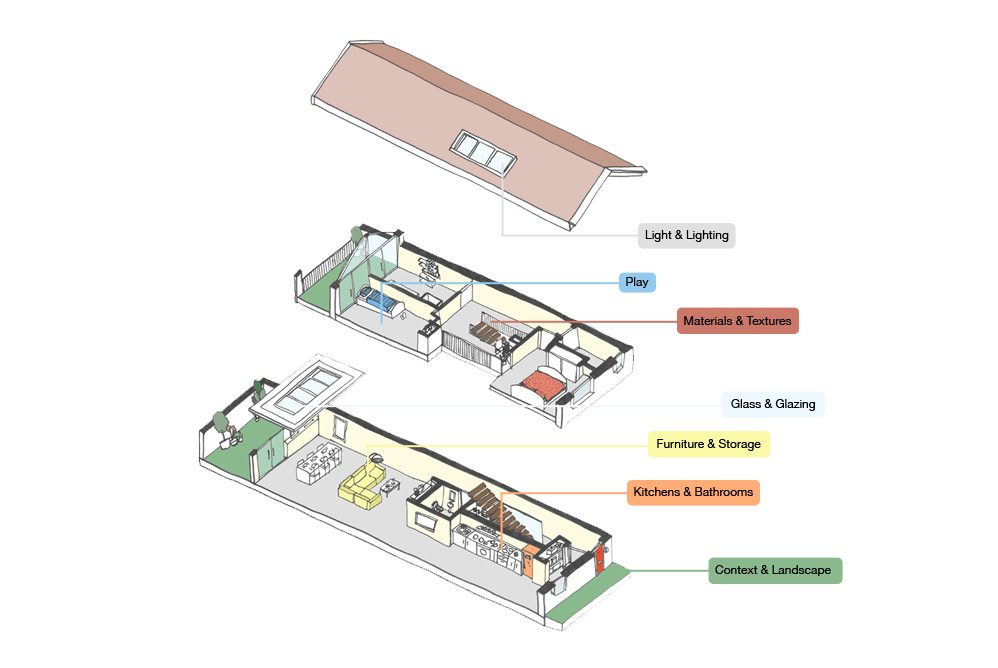
Here we give an example of an Individual Model illustrating Options 2 and 4 below:

Axo-with-labels-998x668

Designing a home that fulfills the expectations of the end user(s) begins with assessing the accommodation needs of the individual(s) who will live within the residential units.

There are many options and possibilities to be considered and each of these can be integrated into the design of multiple occupancy buildings.

Below we list some of these options:

Option 1: One floor accommodation type: Apartment

a) Apartment living for one person (example)

b) Apartment living for two people (example)

c) Apartment living for a family of two parents and up to three children (example)

d) Loft Style Apartment converted from the interior of a building with former use

Option 2: Two/three floor accommodation: Townhouse/Split level apartment/Conversion of a building with former use

a) Townhouse on two floors (Conversion example)

b) Townhouse on two floors (New-build example)

c) Townhouse on three floors (Conversion and New-build example)

Option 3: Multiple Occupancy Buildings

a) Apartment living for one person (example)

b) Apartment living for two people (example)

c) Apartment living for a family of two parents and up to three children (example

Option 4: New Build Family Home – one or two levels

a) To accommodate private and public living on two floors

b) To combine both in one plan over two floors

c) To integrate the circulation between both to enable either a. or b. to work effectively

In our early residential projects we were commonly presented with buildings that had become redundant in terms of their original uses and purposes.  This was an invaluable learning curve during which we acquired knowledge of the character of old building fabrics, textures and structures, and how to combine contemporary materials with the old to evolve a common architectural language.

We believe it is important to take full advantages of all the unique influences that a site or constraint might have on a property and how to develop a design that minimizes the constraints and maximizes the potential outcome.

Architecture cannot modify a context to respond to a building but it can propose a building that both responds to its context and enhance it.

When we are designing homes we are applying the same principles that we apply to all of our projects.

Home is the framework of our lives and our ambition as architects is to offer our clients a genuine response to their immediate and authentic everyday needs.

2014 House Plan in Muswell Hill

Practice News 2018

2nd November 2018 – Planning Granted for Modern Family Home in the London Borough of Enfield

For many years Douglas and King have been promoting the development of left over and backland sites, particularly between large gardens, thoughout London. Many schemes were met with resistance from local councils planning policy as they were seen as Garden Grab or over development.

This project is one of many new Douglas and King homes that have been granted planning consent against council policy as a result of our ability to prove that a good quality design response can provide good quality homes with a minimum impact on the urban environment.

The new 2018 London Plan, published recently as a draft, by Mayor Sadiq Kahn promotes the development of suburban backland sites, something that has for many years been resisted as it is seen as Garden Grab. Out associated blog ‘Garden Grabbing Development’ explains how suburban backland developments, if properly considered and sensitively designed, can go a long way to providing much-needed family housing.

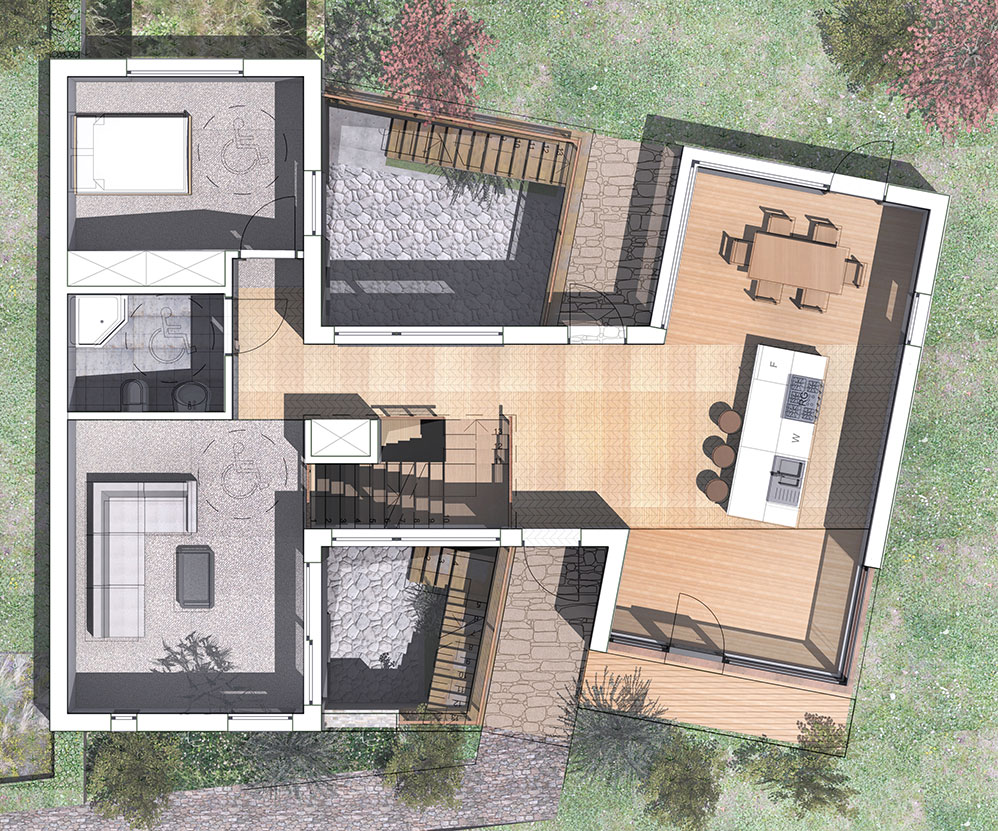
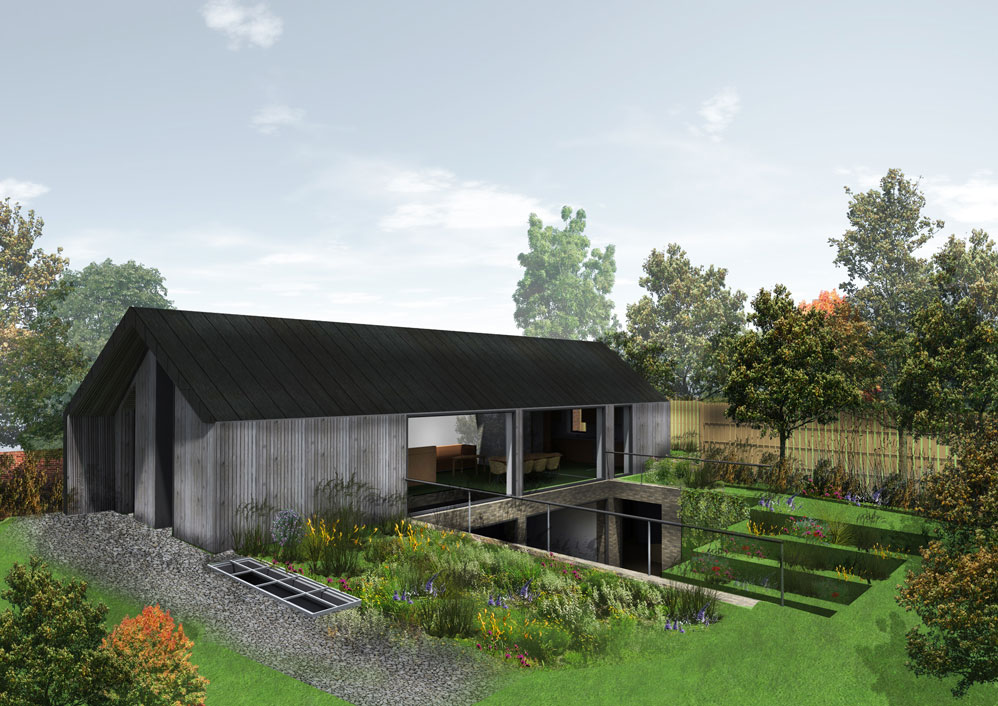
The charred timber clad building is arranged around a subterranean courtyard with open plan accommodation on two levels.

The planning consent was granted unanimously with the conservation officer complimenting DAK on the high-quality design response.

10th August 2018 – ‘First Look’ Housing Development in Essex

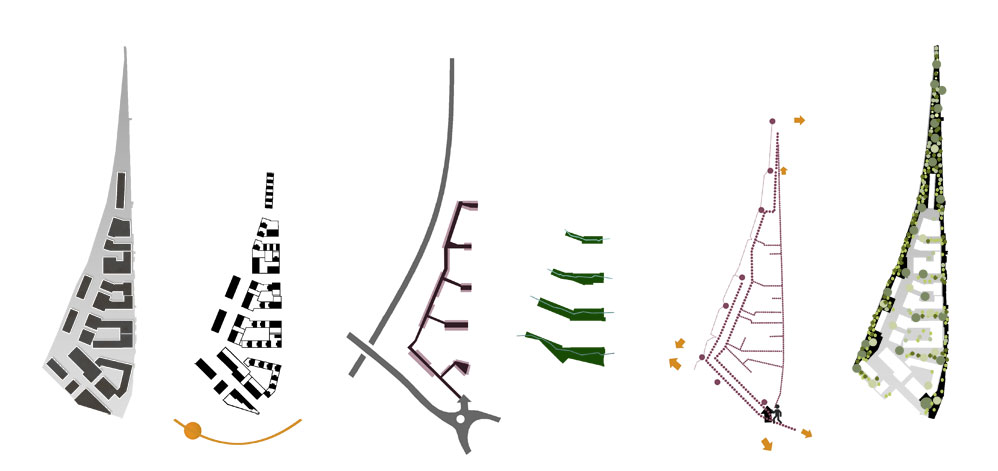
Douglas and King have been engaged to deliver a number of large housing schemes in South East England. The Image here is a first look of the site plan for 100 new homes to be built on the edge of an Essex Town.

The masterplan is arranged in clusters to separate parking and pedestrian circulation and to encourage a successful 21st century neighbourhood through placemaking.

For more information on this project and our approach to creating successful neighbourhoods take a look at our Blog on the importance of ‘Placemaking’ and a social agenda in private sector housing developments.

5th July 2018 – Old Street Masterplan Granted Planning Permission


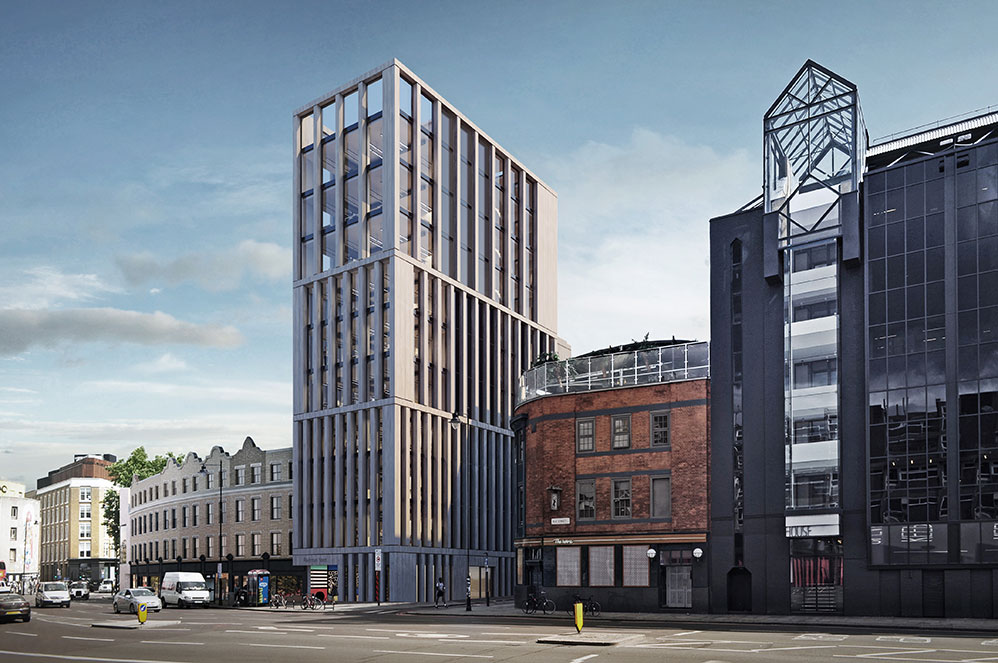
Douglas and King’s Master Plan and Urban Design Framework for a triangular island site, Reitman Yard, bordered by Great Eastern Street (north), Singer Street (west), and Tabernacle Street (south-east) has been granted planning permission by Hackney Council.

The project is a comprehensive development of an island site on Old Street. It is located on the route between Old Street Station and Shoreditch, a key public node that marks the boundary of Hackney and Islington, and the entry into Shoreditch. It is a space that has been neglected over the years and has the opportunity for a key development

The goals of the Master Plan are to enhance the historic fabric of Shoreditch, to express through architecture and conservation the area’s rich history, to mirror the multiplicity of its inhabitants and to protect this Triangle from the commercial hub that is centered around the Old Street
Roundabout.

The site is divided into three building blocks, each of which reflects the diverse urban influences on the site: Titchfield House responds to the Shoreditch Warehouses to the South of the site and its immediate neighbours on Tabernacle Street. It is a robust brick building with a refined and well-proportioned grid of windows and a set back top floor – mirroring the proportions of the buildings opposite.

21st June 2018 – New-build Housing Projects Coming on Stream.

Douglas and King are delighted to announce recent appointments to deliver new- build housing projects in London and SE England.

Building upon a continuing high-level performance in planning victories we are now designing a residential estate of 120 dwellings near Tilbury, 10 spacious contemporary family homes in Hertfordshire and are in the process of delivering 10 new homes on back land sites within the M25.

Our design-led approach and planning successes arise from a fully considered place-making strategy and the authenticity of the developments to create sustainable communities whilst simultaneously ensuring that they are viable and workable for our clients.

The images below are of the initial site visit of the senior architects together with our immediate response to the possibilities from a different site.

10th March 2018 – New Private House on a Back-land Site in Barnet

The 5th in a series of new homes to be built on neighbouring back-land sites in the London Borough of Barnet has been granted Planning Permission.

Project managed by DAK, the design-led dwellings are receiving praise from the local authority who are championing the need for additional homes within the
borough providing they offer design quality and a contextual response to their back-land location.

20th February 2018 – DAK Appointed for a Residential Development in Whetstone

Douglas and King have been appointed to design and deliver a new residential development comprising a mix of houses and apartments in Whetstone.

The practice is working for one of London’s most forward-thinking asset managers and currently, we are negotiating with the Local Planning authority to achieve Full Planning Approval in the summer of 2018.

We are working in collaboration with Strutt and Parker’s new planning consultancy following their recent merger with BNP Paribas.

19th January 2018 – Planning Granted for Contemporary Wandsworth Home

New dwelling on a backland site off Garrett Lane, Wandsworth granted planning against all odds. This is going to be a good one! More to follow…

6th January 2018 – Planning Submitted for New House in Enfield

This project creates a new home for one of our oldest and most loyal clients.

Much of our green belt land isn’t actually green

In this blog we try to unravel the intricacies of policy that impact upon permission being granted for developments in designated Green Belt areas and the controls it is subject to.

What are Green Belts?

Green Belt land refers to an area that is kept in reserve for an open space, most often around larger cities. The main purpose of the green belt policy is to protect the land around larger urban centres from urban sprawl, and maintain the designated area for forestry and agriculture as well as to provide habitat to wildlife.

Green Belt offers a number of benefits for both urban and rural population. By preventing the urban sprawl, it helps protect agricultural activities and the unique character of rural communities. Urban population, on the other hand, is provided an access to an open space that offers opportunities for outdoor activities and access to clean air.

Areas that are designated as Green Belt must not be built upon because green belt is defined as an open space, however, that does not mean that no buildings can be erected on green belt land.

Green Belt policy is nothing new. In fact, restriction of building around cities can be traced back to the ancient times although green belts were proposed for different reasons back then. The first green belt around London, for instance, ordered by Queen Elizabeth I in 1580 foresaw a three-mile wide belt in order to stop the spread of plague. However, it was possible to obtain permission for a new building so the belt around London in the 16th century never truly functioned as such.

The idea of a Green Belt in the UK in the true meaning of the word dates to the 1930’s when the Greater London Regional Planning Committee proposed the Metropolitan Green Belt around London. However, it was not until 1947 when the Town and Country Planning Act allowed local authorities to include Green Belts in their town plans, while the first Green Belts were not designated until the 1950’s with specific purposes:

– To prevent urban sprawl

– To prevent towns from merging into one another

– To assist in the regeneration of urban suburbs by encouraging the reuse of derelict or left over suburban land

In the 1950’s local authorities incorporated Green Belt policies within their individual development plans.  Green Belts are established by policy through Local Development Plans and not by parliamentary legislation as is the case for National Parks or Areas of Outstanding Natural Beauty.  Local authorities are guided by National and Regional Government Policy when devising and implementing their Local Development Plans and it is at this local level that Green Belt boundaries and planning polices are defined. It is also at this local level that planning applications are considered and decided upon.

Where and How Much Green Belt Land is Out There?

Green belt land covers approximately 13% of total area in England, 16% in Northern Ireland and 2% in Scotland.  Wales has only one formally designated green belt area located between Newport and Cardiff.

For example, 22% of all land within the Outer London boundary is Green Belt and this amounts to 1.639 million hectares. This is an interesting statistic as it demonstrates how much land is protected within the overall extent of our capital city and should not be lost if boundary changes occur.

The first diagram below shows how much change has occurred in Green Belt land availability in England during the last 20 years. The fact that the land area has not significantly reduced is an important indicator of how the Greenbelt is protected from development.

What Type of Developments are Permitted on Green Belt Land?

The National Planning Policy Framework (NPPF) provides guidance on Greenbelt Development Policies and these are adopted by Local Authorities.

Paragraph 89 states that inappropriate developments are, by definition, harmful to the Green Belt and should not be approved except in very special circumstances.

Chapter 88 of the NPPF states that ‘Very special circumstances’ will not exist unless the potential harm to the Green Belt by reason of inappropriateness, and any other harm, is clearly outweighed by other considerations.

Chapters 88 and 89 note that the construction of new buildings is inappropriate with the following exceptions (for example purposes):

– The extension or alteration of a building provided that it does not result in disproportionate additions over and above the size of the original building

– The replacement of a building, provided the new building is in the same use and not materially larger than the one it replaces (in the experience of this Architect this usually means 20% larger by volume than the original building or with older buildings the volume of the building as it was at the time of the Town and Country Planning Act 1947).

– Limited infilling in villages, and limited affordable housing for local community needs under policies set out in the Local Plan

– Limited infilling or the partial or complete redevelopment of previously developed sites (brownfield land), whether redundant or in continuing use (excluding temporary buildings), which would not have a greater impact on the openness of the Green Belt and the purpose of including land within it than the existing development


In addition to the above The Local Government Association’s Planning Advisory Service notes that National Planning Policy can make provision for changes to the Green Belt which would then need to be incorporated or adopted within an Authority’s Local Plan. The Planning Advisory Service further notes that the demands for housing can be an exceptional circumstance to justify the review of a Greenbelt boundary.

It should be noted that this does not imply that you can apply for planning for a residential development using the argument that the Local Authority is not meeting its housing supply targets.  Such sites would need to be identified and taken out of the green belt boundary in order for them to be eligible for development.

London’s Green Belt Policy

Within the Draft London Plan 2016 (as reviewed elsewhere on this website) the Mayor has vowed to protect the Green Belt. Whilst the 2016 Draft London Plan does not rule out building on the Green Belt, The Mayor, Sadij Khan has said that ‘Developers building on or near the Green Belt must respect and protect this vital natural resource’.

Policy G2 (Page 103) of the Draft London Plan note the following:

‘Openness and permanence are essential characteristics of the Green Belt, but despite being open in character, some parts of the Green Belt do not provide significant benefits to Londoners as they have become derelict and unsightly.

This is not, however, an acceptable reason to allow development to take place. These derelict sites may be making positive contributions to biodiversity, flood prevention, and reducing the urban heat island effect.

The Mayor will work with boroughs and other strategic partners to enhance access to the Green Belt and to improve the quality of these areas in ways that are appropriate within the Green Belt’.

Within the current London Plan the Mayor’s office notes that Development will be ‘supported if it is appropriate and helps secure the objectives of improving the Green Belt as set out in National Guidance’.

The Reality – Do Projects Get Planning Consent within the Greenbelt?

Although it may be a complex course to navigate it is not impossible to secure planning for development within the Green Belt.  Each year a number of planning applications are granted approval based on one of the following criteria:

1 – Allowed by Policy

Some types of development are permissible as they are not deemed to harm the openness of a Green Belt area. These would be likely to include sports facilities and transport infrastructure.  Small scale residential developments and development supported by local residents through a Community Right to Build Order could also be permissible.

2  – Allowed by Very Special Circumstances

This criteria often means identifying overwhelming reasons as to why the proposed development is appropriate for a particular site and that the harm caused to the Green Belt area would be outweighed by the benefits.

3 – Redevelopment of Brownfield Sites

If a site has previously developed land then planning policy allows for it to be developed. In order to protect the Green Belt the amount of development is generally restricted to the volume of existing buildings on the site.

4 – Remove a Specific Site from Greenbelt Designation

In order to remove the restrictions on the development of specific sites the local authority can remove a specific site from Green Belt designation. Removing a site from the Green Belt can only be undertaken in ‘Exceptional Circumstances’ and in general this means that the amount of development needed to meet the local authority’s needs cannot be accommodated within the areas outside the Green Belt.  This process is generally adopted for larger developments to obviate the ‘high risk element’ i.e. a negative outcome alongside wasted time and costs.

5 – Permitted Development (PD) for Change of Agricultural Buildings to Residential Use

Permitted Development Rights were revised in 2014. One of the new regulations is to allow the conversion of agricultural buildings to residential use without the need for a full planning application. This allows for the conversion for up to 3 dwellings with a maximum of 450m2 of floor area permitted for conversion. (Local authorities are interpreting the legislation in different ways but nearly half of all prior approval applications are successful. Key tests need to be passed but crucially the building to be converted cannot be enlarged in any way).

6 – Paragraph 55 of the NFFP allows single houses of Exceptional Architectural Character

Paragraph 55 of the NPPF allows for a new dwelling to be built in the open countryside (including Green Belt) if it can be demonstrated that it is of exceptional quality or of an innovative design.

Our Position as Architects

 Douglas and King believe the Green Belt should be protected from mass housing developments that are built without consideration for design, quality or lifestyle.  Equally we recognize the importance of preventing urban sprawl, and the value of the Green Belt as an open space and amenity for our cities and towns.

However, we strongly support strategic developments, where appropriate.  We support development control on a local level but we also support well-planned and designed small and mid scale developments that can demonstrate a significant benefit to the local economy and environment with minimal impact.

Reality Check 2

Much Green Belt land isn’t actually green, only 59% of London’s Green Belt is agricultural land. Whilst Green Belt land use is generally designated as ‘open countryside’ there are many examples of former industrial and unsightly sites/uses that have a negative impact.  If these sites were developed respectfully their impact would be positive and ‘greener’ than the existing.

There is another enigma here that links the Green Belt to ‘backland’ inner-city sites.  As housing need has increased and house prices have reached artificial heights we have witnessed a positive response from local authorities in the London area to the thoughtful and sensitive development of ‘backland’ sites.

Click here to read our blog ‘Garden Grabbing’ and to see our ‘House in an Urban Woodland’ project now almost complete to learn more about this topic.

DAK Culture – A Life in the Day of an Architect

A huge amount of material is produced in the daily life of an Architectural Practice. Often it is only the resultant building that is ever seen by anyone outside the Studio.

Whilst projects are led in terms of information updates, team structure programming and reporting, our approach is centered around a design core. The ambition to create a contemporary and uncompromisingly high quality building  is evident in the process materials in Architectural evolution. There are many outstanding and fascinating drawings, models and mixed media that are produced along the way that are hidden and rarely seen outside the walls of the studio.

This galley is a selection of images found in the individual project directories that provide a snapshot of Architecture produced at Douglas and King Architects as part of the leadership, design and delivery process.

+ 2017 Facade Testing Picture House
+ 2017 Courtyard Design Concept Sketch
+ Courtyard Programming Sketch
+ 2017 Facade Testing in Hackney
+ 2017 Wooden Model of Building Grid
+2018 Project Architects during a meeting
+ 2017 Entrance Lobby Concept
+ 2017 Shoreditch Urban Planning
+ 2016 Elevational Study, Highgate
+ Apartment Layouts 2016
+ Texture Analysis 2016
+ 2018 Project Architect Checks
+ 2017 Apartments in Hampshire
+2016 Site Meeting with the Architect
+ 2015 Proposal for a New Workplace in Finchley
+ 2015 Office Building in Finchley
+ 2014 Facade study in Haggerston
+ 2014 Urban Analysis
+ Sectional Analysis 2014
+ 2017 Islington Commerical Office Space
+ 2014 Elevational Testing for Re-habitation as Homes
+ 2009 Re-inhabiting a Listed Structure
+ 2009 Elevational Concept on the Kingsland Road
+ 2009 The Kinglsand Road

DAK Culture – Spin Off Projects

The Design Team at Douglas and King are continuously engaged with ‘spin off’ projects, often as part of larger masterplanning or commercial building developments. Projects include Pool Houses, Bars and Restaurants, Temples, Art Galleries, Street Furniture and Public Spaces.

‘Outlier’ projects follow the same creative processes at the design stage as larger projects and are Project Managed in the same way as out core commercial and residential projects.

This gallery is a selection of images and photographs that are taken from the back catalogue and give an indication of the range and depth of outlier projects the practice is continuously involved in.

+ 2014 Hotel Floor Plan Concept
+ 2014 Hotel Concept
+ 2014 Hotel Concept - Young Floor
+ A New School Playground Concept
+ 2024 The Architects Get Help
+2010 Coastal Street Furniture
+ 2010 Concept for a Coastal Shelter
+ 2010 A New River Front in Maidstone
+ 2015 A Hindu Temple in Surrey
+ The Gran Plan for a Temple
+ 2015 New Bar Interior in Shoreditch
+ 2015 A New Bar in Shioreditch
+ 2015 The Strongroom Brand
+ 2016 The New Strongroom Kings Cross
+ 2016 Concept Entrance
+ 2018 A Playful Location
+ 2011 Modelling Form
+ 2010 Experimental Visualisation
+ 2017 Testing Form
+ 2011 A Giraffe House in Elstree
+ 2009 Ullswater Yacht Club
+ 2009 Sports Facility
+ 2017 Testing Geometry
+ 2016 New Pavillion
+ 2016 Pavilion in Hoxton
+ 2009 Dublin Square Plan
+ 2009 Dublin Town Square