Sustainability in our DNA

At Douglas and King we champion sustainability in all of our developments. To be truly effective, sustainable design requires a holistic approach to a whole range of issues from social engineering to construction impact. A viable approach to sustainable design requires sustainability to be engrained into the DNA of all design possesses and development decisions.

In architecture, this decrees a responsible approach to all aspects of development to create a positive future for all. Sustainability is not just about conserving our planet’s resources but also about creating places that encourage successful communities and whose life span endures beyond a generation. We work to create low impact developments that eliminate pollution and minimize environmental and climate damage.

Our projects are exemplars in sustainability because we set standards through example. Our track record proves that that sustainable developments can be economically viable and engender a positive legacy for future generations.

We are an RIBA Chartered Practice. Our Environmental Policy is fully compliant with the guidelines set out in the RIBA’s Chartered Practice Environmental Policy Guide.

RIBA 2030 Climate Challenge

As a Chartered Practice, Douglas and King have signed up to the RIBA 2030 Climate Challenge Checklist. The policy sets out the actions the practice is taking to set standards for meeting the need to limit global temperatures below a 1.5°C rise.

Focused Knowledge

As Design Team Leaders we run annual focus groups to ensure that our own and wider team members are implementing sustainable design. For our 2020 programme we shall be hosting seminars, writing research papers and highlighting our knowledge on live projects. Our programme includes presentations from guest experts and fellow consultants, visits and studies of exemplar projects, and attending lectures given by The Building Research Establishment and other relevant bodies.

Focus Areas for 2020  Include

Creating Sustainable and Aspirational Social Environments

Aspirational Homes are Sustainable

Sustainable Drainage and the Natural World

Innovation and Technology that Limits Emmisions and Energy Use

Sustainability and The Experts

Kintsugi and Re-Inventing Existing Buildings

1. Creating Sustainable and Aspirational Social Environments

Placemaking is the tool by which we encourage sustainable developments and communities. Our placemaking blog provides a lot of detail on our principles and approach.

Whether we are designing 3 houses or 300 we consider who will live in the homes we create and how they will interact with each other and their environment.

We design inclusively and holistically in order to create positive social impact through our developments.

Example Projects with Placemaking at their Core

This project creates hundreds of new homes in Essex within a placemaking context. The construction phase is low carbon because we are using offsite timber framed construction methods. Our master plan for this new community is socially inclusive and facilitates communal interaction through shared common spaces and public transportation.

This is one of our suburban densification projects and aligns with the Mayor of London’s New London Plan. Here we are achieving a 38.4% improvement upon the requirements of Part L of the Building Regulations relating to carbon emissions. The development is an example of how a brownfield site can be re-imagined, create much needed new homes, and provide a robust and long life balance

In this project we are designing new family homes around a copse in the Hertfordshire landscape. This small new community will have a low carbon footprint including a sustainable drainage system. The rural environment is central to the community spirit we are creating and our landscaping design reflects this

2. Aspirational Homes are Sustainable

The design of successful homes requires an understanding of practical issues of lifestyle, it is important to create unique and inspiring spaces that are flooded with daylight during the day and are warm and safe at night.  We design buildings of architectural excellence designed to create a sense of belonging for their owners and the ability to be fully integrated and identified with their specific site.

Example Projects set to Inspire

We design houses that are unique to their location and use. House in an Urban Woodland demonstrates our approach to create a contemporary family home and how we design in a way that allows the client to develop a strong emotional bond with their home.  We listen to our clients, to hear how they wish to inhabit their home, and develop our design accordingly.  We ensure that the design makes the best use of orientation and the natural features of the site including sun, wind and landscape.

This project was shortlisted by the Architects Journal for the award category of the best residential development in the UK built during the last year with a construction budget under £10m.

The form of the building suggests an architectural conversation between the neighbouring listed Church and the area’s mansion block typologies. The grid of the windows emulates the proportions of both and re-interprets them in a modern way to give expansive views of the immediate surroundings and creating light filled interiors within.

This is a robust concrete and masonry building that will last and look good for a very long time. It is about a permanence of architecture, built in a traditional way in an historic context, yet with an unashamedly modern aesthetic.

External/internal wall insulation was inserted to a gauge of 150 mm, an unusually generous degree, and the flat roof of the building is wrapped in solar panels to provide an alternative and supplementary energy source.

3. Sustainable Drainage and the Natural World.

Why is it you can build in Holland at all when the whole of the Netherland is located in a flood zone?

It is argued that building within flood zones is not sustainable due to rising flood levels and frequency through climate change.

Our landscape is constantly changing and rivers and low lands are are more threat than ever before from flooding. Local Councils and the Environment Agency are trying to meet the challenge faced with large civil engineering flood defence programmes. At Douglas and King we design our flood risk contingency at the concept stage of every project. We consider the viability of creating onsite flood barriers or whether to build beams into the landscaping to elevate the ground floor levels of the structures.  In all cases we aim to achieve a higher than 1 in 100 year climate change flood risk level.

There are exemplary projects throughout the world that have met the challenges of building on flood zones and we are constantly learning from the techniques employed and their effectiveness as part of our ongoing sustainability strategy.

Example Projects that live Above the Water

Our project creating five new family houses on the riverside in Buckinhamshire is one of several projects that are built within a flood zone as designated by the Environment Agency.

We have worked with specialist Engineers to set the ground levels of the builings above the 1 in 100 year Climate Change floor level. Each dwelling is designed with an undercroft to take any flood water away from habitable space, the flood level being calculated through extensive survey and investiagetion both upstream and downstream.

These homes have ground floor levels set 1.1m above the surrounding terrain, well above the average river level.

4. Innovation and Technology that Limits Emissions and Energy Use.

As construction technology is constantly changing and evolving therefore we need to keep in step as to how we best approach and implement sustainability practices in current construction procedures.  It is critically important that we as Architects understand the environmental impacts of the materials we specify.

For example, concrete manufacture creates 10% of global greenhouse gas emissions. Today, in order to reduce the environmental impact of using pure concrete, the specification could replace 30% of the cement in a concrete mix with PFA Fly Ash, or replace 70% of the cement in a mix with GGBS or blast furnace slag, both of which reduce the amount of cement used and also add strength. Both PFA and GGBS are waste products from coal-fired power stations and blast furnaces both of which are currently being fazed out, however there is a 30-40 year stockpile in the UK alone.

Structural steelwork has a better environmental footprint. The initial excavation and production is very costly to the environment but it is a material that is easily recyclable so scores very well in lifecycle points.

However, the best and most sustainable material for construction remains timber and this is widely used in off-site construction processes.

We also keep a close eye on developments in the following key areas:

On Site Renewable Energy Sources: Wind / Ground and Air Source / Solar / Hydro

Carbon Footprint of Materials with a strong support for timber in construction methods

Heat recovery and cooling – MVHR and Cross Ventilation

Encouraging landscape and ecological values

Projects with a the Highest Standards in Low Environmental Impact

Our proposed Picture House in Shoreditch is designed with a BREEAM Excellent rating which is the highest standard for minimal environmental impact of a building of this type. The facades are designed to create solar shading and materials have been selected to minimise the carbon footprint of the entire construction process.

5. Sustainability and The Experts.

To maintain our sustainability aspirations and to deliver the best possible solutions we employ specialist Environmental and MEP consultants as core team members from the very beginning of our projects planning. From the conceptual stage to user handover their expertise and advice leads our design sustainability values.

Our Core Environmental Expert Partners are

There are a number of regulatory and benchmark organisations and standards that we work to and with depending on the type, scale, occupancy needs and location of a project.

Passivehaus

Passivhaus is a voluntary standard for energy efficiency in a building, which reduces the building’s ecological footprint. It results in ultra-low energy buildings that require very little conventional energy sources for space heating or cooling. Our new homes in Dorney Reach aim to achieve Passivehaus accreditation.

Passivhaus buildings require little energy to maintain a constant pleasant temperature, due to excellent insulation, air tightness and efficient heat recovery systems. This means that these buildings can easily be powered by renewable energy sources such as solar panels and heat pumps. Sustainable constructions are therefore a very attractive option for residents and homeowners as they drastically cut energy bills and help to lower the carbon footprint. Passivhaus energy bills are slashed by typically 90% – that can mean a saving of several hundred pounds per year. For example, energy bills for a 3 bedroom house can be as little as £100 per year.

This type of sustainable construction is also a wise choice for social housing projects, as tenants will have considerably lower heating bills.

Code for Sustainable Homes and the Building Regulations

The Code for Sustainable Homes (the Code) was an environmental assessment method for rating and certifying the performance of new homes. The Code  brought about a step change in applying targets to sustainable development. In its time it set a national standard for the design and construction of new homes with a view to encouraging continuous improvement in sustainable home building.

In 2015 it was replaced by optional Building Regulations which set guidelines for various services and supplies, eg water and access, along with a new national space standard. The optional regulatory standards are comparable with the requirements for the former Code for Sustainable Homes Level 4 and are often a requirement for planning permission to be granted.

BREEAM

BREEAM is an international sustainability assessment method for the master planning of projects, infrastructure and buildings. It recognises and reflects the value in higher performing assets across the built environment lifecycle, from new construction to in-use and refurbishment.

Our commercial projects in London are all BREEAM rated and the Picture House and Titchfield House, both commercial developments have been rated ‘Excellent’.

LEED

Leadership in Energy and Environmental Design is the most widely used green building rating system in the world. Available for virtually all building, community and home project types, LEED provides a framework to create healthy, highly efficient and cost-saving green buildings

Our commercial projects in London are all BREEAM rated and the Picture House and Titchfield House, both commercial developments have been rated ‘Excellent’.

BIM Level 2 – Including Lifecycle Impact

BIM or Building Information Modelling enables 21st Century architects and designers to significantly improve energy performance and stimulates  innovative ways of delivery and operation. Sustainability assessments can be built into BIM and it is a compulsory component of all public sector building commissions.

In terms of research there are thousands of scientists working on this most important and pressing issue and here we list a few of the specialist bodies/regulations that we work with or refer to regularly.

A step change in tackling the housing crisis

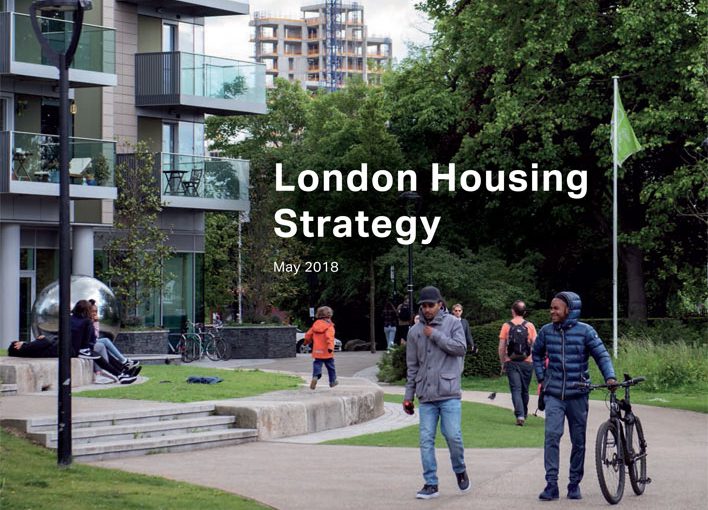
In May 2018 The Mayor of London published The London Housing Strategy which you can access here.

See our accompanying blogs:

“The Role of Small Sites in Achieving London’s Housing Delivery Targets”

and

“2017 Draft London Plan – An Architects View”.

In the next decade small sites, less than 0.25 hectares in size, will make a significant contribution to achieving The Mayor’s Housing Strategy.

SLHAA Assessments show that small sites, subject to revisions in local planning policy with a ‘Presumption in Favour of Development’ will represent 24,573 new home completions per year over 10 years.  These sites have historically been  classified as unsuitable for small-scale development under a Borough-wide policy which conversely favoured ‘Presumption Against Development Approval’

Below we include key points from the policy outlined in the document:

Mayor, Sadiq Khan, wants every Londoner to have access to a good quality home that meets their needs and at a price they can afford.

The strategy’s central priority is to build many more homes for Londoners – particularly genuinely affordable homes. The Mayor believes this is the only way to solve London’s housing crisis over the long term. Doing so will require action to unblock stalled housing sites and increase the speed of building. It will require steps to diversify who is building new homes, as well as where and how they are built and for whom. The Mayor is clear that he wants to meet our housing needs while protecting the Green Belt and open spaces. That means London must build at higher densities and ensure that all parts of the city host their fair share of new homes.

Homebuilding in London has become dominated by a relatively small number of large private sector developers who focus on building market sale homes. This model mainly builds homes that only a small segment of the population can afford and therefore it cannot support the kind of increase in delivery that we now require.

We need to boost different models, such as builders delivering purpose-built rented homes, more small-scale developments in outer London, and more delivery by housing associations. Sitting alongside this, the industry itself needs to be transformed, which means addressing the gap in construction skills and attracting more Londoners into a career in the construction industry.

Most important of all, we need to see more genuinely affordable homes built by the public sector. It has become clear across the post-war period, and it is truer than ever today, that London’s housing needs will not be met without concerted intervention by governments at all levels.

Municipal homebuilding provided nearly two-thirds of London’s new homes during the 1960s and 70s. Today, many local authorities have active council home-building programs, but they are severely limited in how far they can go by an array of top-down regulations and financial constraints.

Below, we set out the Borough by Borough targets that are to be achieved during the next decade from sites which have previously been viewed as unsuitable for small-scale development.

The Draft London Plan 2017 - Part H2 (Small Sites)

The London Mayor has stated that:

‘Over many decades, London has evolved, resulting in an extraordinary web of distinctive residential streets, squares, markets, parks, offices, and industrial and creative spaces. And the built environment we see today – the legacy of previous generations – has not just shaped the way our city looks, but has had a profound impact on how and where we live, work, study and socialise with one another.

Throughout this evolution, London has seen waves of growth and our surroundings reflect these past chapters of rapid development and change’.

Today our city is a rich environment endowed by the vision of previous generations. The historic street patterns, buildings and public spaces that survive today have done so because they were authentic representations of their time, admired and respected by successive generations of Londoners and continue to contribute to the uniqueness that is London.

Planning Policy in London will and must change in response to the Mayor’s aspiration to increase the built density required by London’s housing needs. The extent of the proposed changes in density will require Planners and Londoners to accept the fact that significant parts of their built environment will need to evolve in character and form in order to deliver the housing densification needed over the next decade.

We must as Londoners promote the concept of  ‘Good Growth‘ and the guidelines for its delivery as set out in The Mayor’s London Housing Strategy.

DAK Culture – A Life in the Day of an Architect

A huge amount of material is produced in the daily life of an Architectural Practice. Often it is only the resultant building that is ever seen by anyone outside the Studio.

Whilst projects are led in terms of information updates, team structure programming and reporting, our approach is centered around a design core. The ambition to create a contemporary and uncompromisingly high quality building  is evident in the process materials in Architectural evolution. There are many outstanding and fascinating drawings, models and mixed media that are produced along the way that are hidden and rarely seen outside the walls of the studio.

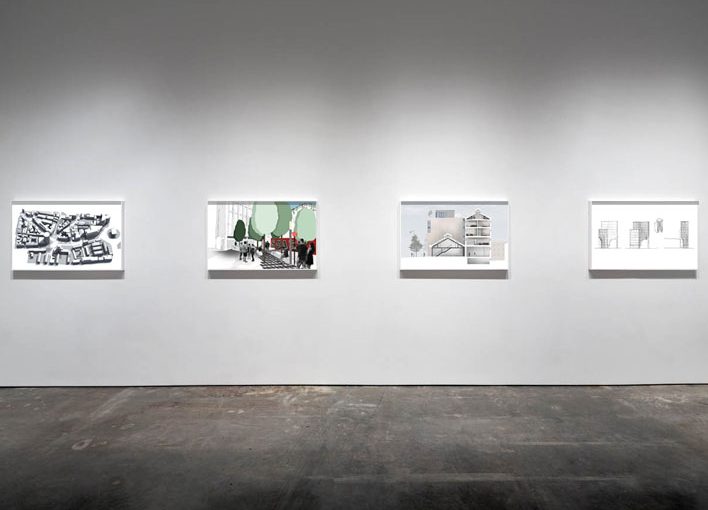
This galley is a selection of images found in the individual project directories that provide a snapshot of Architecture produced at Douglas and King Architects as part of the leadership, design and delivery process.

+ 2017 Facade Testing Picture House
+ 2017 Courtyard Design Concept Sketch
+ Courtyard Programming Sketch
+ 2017 Facade Testing in Hackney
+ 2017 Wooden Model of Building Grid
+2018 Project Architects during a meeting
+ 2017 Entrance Lobby Concept
+ 2017 Shoreditch Urban Planning
+ 2016 Elevational Study, Highgate
+ Apartment Layouts 2016
+ Texture Analysis 2016
+ 2018 Project Architect Checks
+ 2017 Apartments in Hampshire
+2016 Site Meeting with the Architect
+ 2015 Proposal for a New Workplace in Finchley
+ 2015 Office Building in Finchley
+ 2014 Facade study in Haggerston
+ 2014 Urban Analysis
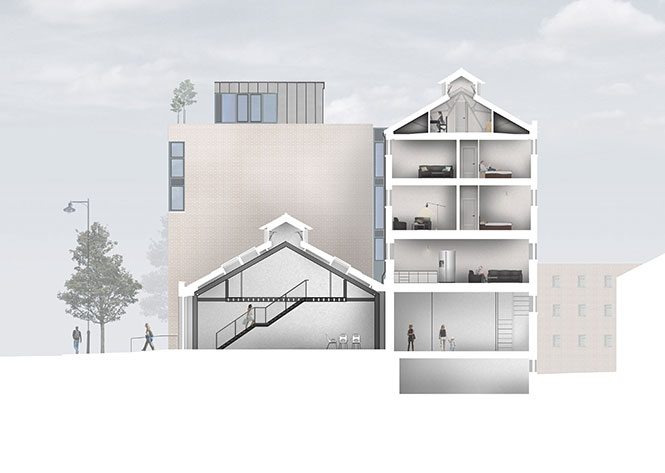
+ Sectional Analysis 2014
+ 2017 Islington Commerical Office Space
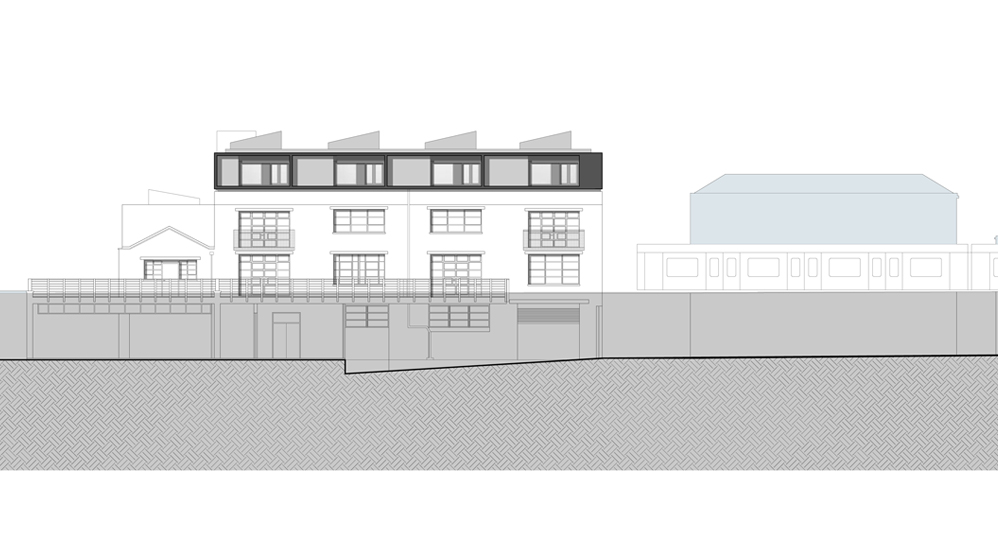
+ 2014 Elevational Testing for Re-habitation as Homes
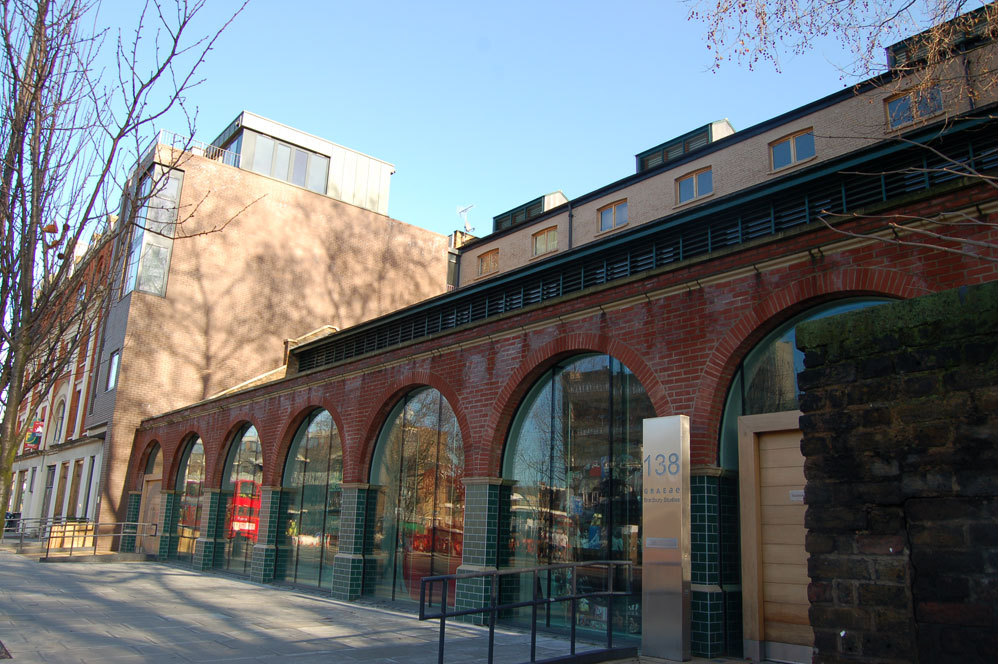
+ 2009 Re-inhabiting a Listed Structure
+ 2009 Elevational Concept on the Kingsland Road
+ 2009 The Kinglsand Road

Oranges and lemons: when I grow rich-say the bells of Shoreditch

Early Origins & Development

The name Shoreditch derives from the Saxon word ‘Soersditch’ as it was known, interpreted as ‘Sewer Ditch’, and thought to be a reference to the boggy watercourse of the river Walbrook which rose in the general direction of Curtain Road. Shoreditch originated at the junction of two important Roman roads that preceded the courses of Old Street and Kingsland Road.

Medieval Shoreditch was a paradox then as it is now – priories, convents and religious communities were founded here amongst it green open spaces and alongside traditional industries of that time such as brick making, tanning, ironmongery, saddling and tailoring.

By the 12th Century, the parish of St Leonard’s Shoreditch became established following the construction of the Church of St Leonard on the site of a previous church.

The historic narrative of Shoreditch runs through the market gardens that supplied medieval London and served the burgeoning population of Shoreditch and the City to London to the South. Shoreditch’s proximity to the City led to it becoming an early form of ‘suburb’ into which the overcrowded City spread.

Walbrook River Map

St Leonard’s Church

16th to 18th Century Development

Hoxton has been an area of entertainment and refreshment for centuries, located as it was on one of the main eastern thoroughfares into The City of London. During this period two of the first London theatres were built in Shoreditch, including Shakespeare’s Curtain Theatre built in 1576. It is said that Shakespeare’s first ever play was performed in Shoreditch.

In the late sixteenth century there were “enclosures for gardens, wherein are built many fair summer houses, some of them like midsummer pageants, with towers, turrets and chimney tops, not so much for use or profit, as for show and pleasure”.

Towards the end of the 17th Century and the beginning of the 18th Century a more residential and formal approach to town planning came into vogue. It was at this time that Hoxton Square was laid out in as an arrangement of terraced properties around a centralised garden space. Incidentally Hoxton comes from the Saxon word Hochestone, meaning a farm or fortified enclosure belonging to Hoch or Hocg.

Since 1140 there has been a church sat on the site of St Leonard’s at the northern end of Shoreditch High Street. The reconstruction of this church in 1736-40 encouraged the beginning of rapid growth and development in Shoreditch. The previous church had four aisles and a tower seventy feet high, with five bells. Those five bells are famous for the nursery rhyme “Oranges and Lemons: when I grow rich/say the bells of Shoreditch”. The Church was the first in London and probably in the country to be lit by gas in 1817.

From the 1770s, large areas of open land were beginning to be filled with a mixture of fragmented roads and formal developments. Many roads were lined with terrace houses, producing a street pattern that remains today.

The Original Site of Shakespeare’s Globe Theatre

Hoxton Square

St Leonard’s Church ‘Oranges and Lemons’ Sign

A mother and her daughters looking over the terraced housing in Shoreditch

19th to 20th Century Development

An unusual engraving of 1845 shows Shoreditch High Street with Georgian shopfronts inhabited by shops and trades of all descriptions. Early Victorian pubs and warehouses were beginning to be built. Trades included drapers, tailors, clothiers, mercers, boot and shoe makers, chemists, butchers, ironmongers, jewellers, oil and colour warehouses, etc. Shoreditch had become an important manufacturing area in the East End.

The quarter became industrialised in the 19th century with manufacturing centered around furniture making. It was during the late industrial period that Great Eastern Street was built, a main thoroughfare and a direct route from Old Street to Bishopsgate Goods Yard. With the decline of manufacturing in the 20th century the quarter became run down and semi-derelict however, furniture-making, clothing and printing were three trades that survived well into the early 21st century.

By the early 20th Century, Shoreditch was not a pleasant place to live, it was overcrowded and had the reputation of being unsafe. By the mid 20th Century the effects of two world wars resulted in a substantial loss of buildings: the population diminished and many trades moved north and east.

Book Market along Shoreditch High Street, 1930

Industrial Furniture Workshop in Shoreditch, 1959

Overcrowding, 1929

Today

Through the industrial and manufacturing eras of the 18th and 19th centuries, we arrive in the 21st century when Shoreditch is acknowledged to be London’s creative hub.

The first part of the 21st century has witnessed the advent of a successful design and conservation policy implemented by LB Hackney’s Planning Department. The Shoreditch Triangle is an area defined by Great Eastern Street, Shoreditch High Street and Old Street which now boasts some of the finest contemporary buildings that respond to the heritage and character of their neighbours.

These days the establishments that give Shoreditch a significant cultural status include the London College of Fashion, The Geffrye Museum, The Ace Hotel, Arnold Circus, Lena’s Store and The Strongroom to mention just a few – there are many others and more being conceived every day.

Shoreditch today represents one of the most successful inner-city regeneration/transition zones in Europe.  The design and digital industries within the City Fringe have created a significant Tech Hub and this coupled with the conversion of former warehouse and industrial buildings into social and artist live/work spaces has transformed the area into a must-see London destination.

Shoreditch Triangle bound by Old Street, Great Eastern Street and Shoreditch High Street

Image from London College of Fashion

Cafe in Shoreditch, Modern Society

Shoreditch Graffiti

Mayor of London sets out strategic growth plan

What is the Draft London Plan?

The London Plan is a strategic plan issued by the Mayor of London that sets out a policy framework for the future development and sustainable, inclusive growth of the capital.

It sets out housing targets for individual London boroughs and encourages the development of small sites to boost overall housing delivery and stipulates material considerations designed to influence planning policies borough-wide.

Whilst the 2016 Consolidation Plan is still the adopted Development Plan, in November 2017 the Mayor published an updated version of the Plan for consultation purposes with revised strategic targets for new home deliveries across Inner and Outer London.

In this blog we give a brief synopsis and commentary on how this may affect those of our clients who are within the Landowning, Development and Private Client sectors.

Timeline

The timeline for adaption is as follows:

Key Points

Key points of note within the plan are:

Strategic Housing Targets for adaption by 2028

– 64,935 new homes across London to be achieved per annum

– Significantly more homes within outer London Boroughs (ranging from 1200 to 2000 homes per annum)

Presumption in favour of small housing developments

– Small and medium sized developers to make a significant contribution to achieving housing targets

– No Affordable Housing requirement for developments of 10 homes or fewer (Note: Anticipating the possible resistance to this proposal from boroughs, the Draft Plan sets out precise housing targets for the delivery of homes on small sites specifically and breaks this down to borough level)

– Relaxation of lift core requirements in small developments above ground level

Delivery of Affordable Housing

– Affordable Homes target to become 50% in the long term with a minimum of 35% in the short term

Housing Mix Requirements

– Recommendation that prescriptive housing mixes be eliminated from borough development plans. This could result in housing mixes responding more readily to market conditions and demand

Design Quality

– A significant emphasis on design and ‘high quality design’ with increased architect involvement within the S106 planning mechanism

Car and Cycle Parking Provision

– Support for car-free developments (in line with the Mayor’s agenda to improve air quality)

– Increased provision of cycle parking spaces

Housing Targets By Borough

Total 10 year capacity:

Summing Up

We will be keeping our developer and landowner clients informed as the Draft Plan moves through the above stages and will continue to advise our close partners on the availability of viable development sites.

– Douglas and King are experts in the development of left over or backland sites across inner and outer London boroughs

– We address the specific influences and constraints of any particular or individual site

– We are effective in overcoming planning restraints and policies

– We deliver sustainable cost-effective mixed-use and residential projects of all sizes


The Current and Draft London Plan can be easily accessed from the links below:

Current London Plan

https://www.london.gov.uk/sites/default/files/the_london_plan_2016_jan_2017_fix.pdf

Draft London Plan

https://www.london.gov.uk/sites/default/files/new_london_plan_december_2017_web_version.pdf

Bansky and Noir pull punters into Shoreditch

We have witnessed at first hand the district’s transformation from an inner-city backwater to one of Europe’s most vibrant social, business and creative quarters. We love being here and champion the rich mix that the area offers.

It was the dereliction of the industrial landscape that set the scene for the first creative influx into Shoreditch. In the ‘70’s through to the ‘90’s the large post-industrial buildings, some in a derelict state, were colonised by individuals who were making their emergence on the countercultural scene developing in London in those decades.

The sprawling energy of the area mirrored their rejection of ‘formal’ art.  The cheap rent and availability of the area’s large lofty spaces encouraged them to set up studios for co-working, collaboration, etc and many continue to live and work in Shoreditch today.

Individual inhabitants of these decades included Damien Hurst, Alexander McQueen, Tracy Emin, Sam Taylor Wood and Gary Hume.  By the early 21st c the White Cube Gallery in Hoxton Square was hosting exhibitions by Gilbert and George, Donatella Versace and Kate Hudson.

Pioneering venues included the former Blue Note Club in Hoxton Square and the Strong Room recording studios on Curtain Road, the latter of which has always had an arts led agenda and the ceiling of the lower bar has a large canvas by the Punk Rock artist Jamie Reed.

It was not long before this countercultural trend spilled out onto the streets in the form of graffiti, wall art, music and ready-made sculpture. Significant works by Banksy and Noir can be passed by on the streets of Shoreditch – its public art gallery is open to all.

‘Let us Adore and Endure Each Other’ illustrates in every way the paradox that characterises Shoreditch. The spontaneity of its message and execution across the city of Philadelphia reflects perfectly every stage in the history and evolution of Shoreditch.

adore verb (LOVE)

to love someone very much, especially in a way that shows a lot of admiration or respect

OR to like something very much

endure verb (EXPERIENCE)
to suffer something difficult, unpleasant, or painful:

The area has embraced and endured change in every century of its history and these transformations have left indelible physical and cultural markers visible throughout its urban landscape, streetscapes, periods of decline and its eventual ascent.

The themes that run through the Shoreditch story are the street and public arts narrative of the area.

+-8-Noir-998x749

Integrating design and construction

Membership of the RIBA is recognised the world over as a symbol of professional excellence among both clients and architects. Founded in 1834, and awarded its Royal Charter in 1837, the Royal Institute of British Architects (RIBA) is the UK charter body for architecture. Its mission is to advance architecture by demonstrating benefit to society and promoting excellence in the profession.

The RIBA publish guidelines in the appointment of an Architect and publishes standard appointment documentation, these are know as the Standard Agreement for the Appointment of an Architect.

The RIBA Plan of Work sets the industry standard for structuring a development project. The RIBA Plan of Work includes an online interactive model that may be downloaded and modified to suit the unique requirements of a particular project.

More information on the plan of work can be found on the RIBA website by CLICKING HERE.

A minor complication is that the Architects Appointment or Standard Form of Agreement for the Appointment of an Architect references the previous edition of the Plan of Work, the former addition is structured quite differently. Below we summarise how the current and former Plans compare as a quick reference in order that projects can be properly tracked during the transitional period.

Sky space living

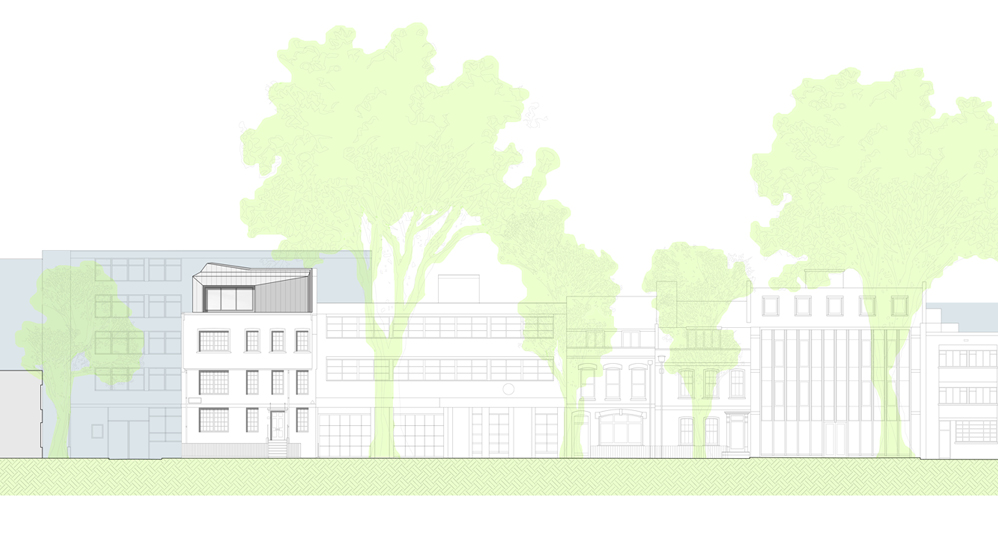
There has been a growing trend to maximise sky space living possibilities within the dense urban fabric of Central London where land values have appreciably risen and lower level spaces are largely given over to commercial and residential use.  In this blog we describe what we have learned from our experience of rooftop extension design.

Low-rise buildings of six to seven storeys through to high-rise buildings of sixteen to seventeen storeys, residential or otherwise used, are eminently suited to a rooftop implant.  These typologies can offer options for private residential apartment (s) or studio/office (s) or a combination of the two.

Rooftop developments are as functionally diverse as are those who commission them.  One might be a penthouse apartment to be lived in by the client, one might be a solicitor’s office for his/her personal use, one might be a residential development of five apartments to rent or a mixed development comprising two spacious apartments and studio/office space.

Douglas and King have completed several rooftop developments in Shoreditch – all in the Hackney Conservation Area. We completed the first one several years ago – it sits on the sky space of our old studio and one of our on-going projects now sits on the roof of our current studio.  Three of our current sky space projects have come to us from clients we had already worked with. New clients come to us simply because of our local and specific rooftop development expertise.

There are several ways to approach rooftop design – as a new build on a clean slate site, as an addition to the skyline as viewed from the street or as an addition to a host building.  We have found that a small difference to the context can result in a very different development approach.

Rooftop projects encourage designers and builders to sharpen their thinking and to work together from the early stages in order to produce a successful, efficient and cost-effective outcome.  There is little room for later design revisions or changes to the construction approach. The bonus for this early and close collaboration is that the project, once on site, tends to move faster as a result of the forward planning.


The design parameters are defined by the structure, access and services determined by the host building, its height and its immediate surroundings. The design has to be conceived with considerations such as scaffolding and access, disturbance to neighbours, noise levels, increased vehicular traffic, and the other unwelcome aspects of the construction process – each and every one of these should be addressed and minimised.  In some projects, to gain access for craning large elements onto the site has proved to be impossible.

For each project the design team evaluates the benefit of using prefabricated elements in order to minimise the construction timeframe, site access and working at height.

In general we find that the most workable solution is to erect a steel frame and construct exterior walls using glazed and cladded panels.   If the structure of the host building is irregular, then the structure of the extension will reflect the irregularity and accordingly it is easier to erect and complete on site.  We often design the proportions of the façade and glazing so that they interact with the grid positions determined by the host building below.

Sometimes traditional methods of construction can prove to be the most expedient option.

Designing with relatively traditional methods means that we can approach a wider range of contractors to gain broader expertise and competitive prices. We try to specify dry construction methods wherever possible, e.g. a steel frame with cladding that can be mechanically fixed. The skimming of plasterboard walls and ceilings, and the grouting of tiles are the only concession we try to make to wet trades.

Where possible building elements are prepared at ground level and hoisted or craned onto the construction platform in easy-to-handle chunks. We have found that working on rooftops ensures that the main contractor carefully considers the construction programme and process, the site set up and storage facilities– there is never enough room for working or storage at high level.

 Rooftop extensions involve working over someone else’s head, home or place of work. We have ourselves experienced one of our own projects being built over our heads so we know how disruptive it can be. The noise generated by work on a roof level travels down the building with alacrity, as does the fallout of dust and dirt and can be alarming to the residents below if they have not been made fully aware of potential side effects.  In advance of the construction phase we go to great lengths to ensure that the other building occupiers are conversant with the construction process, time frame, etc.

When designing at rooftop level it is tempting to prioritise the external views which are generally spectacular.  We have found that extensive glazing is inappropriate in domestic and small office environments as it results in a lack of privacy and contributes to a greenhouse effect.

The outdoor spaces associated with rooftop developments give endless possibilities for sculpture courts, exotic planting, fabulous views and, for star-gazers – an observatory of their own.